
Lessons from one of the wealthiest business leaders for Key Account Managers.
INTRODUCTION
Warren Buffett turns 95 this August. He still lives in the same house in Omaha he bought in 1958 for $31,500. He still drinks Cherry Coke for breakfast. And after 60 years at the helm of Berkshire Hathaway, he has finally stepped back.
When Greg Abel took over as CEO at the start of 2026, it marked the end of one of the most remarkable runs in business history. Under Buffett's stewardship, Berkshire Hathaway grew from a struggling New England textile mill into a conglomerate worth nearly a trillion dollars, with holdings ranging from GEICO and BNSF Railway to Coca-Cola and Apple. He delivered compound annual returns that outpaced the S&P 500 for six consecutive decades. His personal fortune has topped $100 billion. He has given most of it away.
But here is what strikes me most about Warren Buffett. It was never really about the money.
The money was the output. The philosophy was the engine. And in an age where artificial intelligence promises to automate analysis, accelerate decisions and optimise everything from pricing to customer segmentation, Buffett's philosophy feels not just relevant but urgent.

Because what AI cannot replicate, at least not yet, is wisdom. The kind that comes from 60 years of watching businesses succeed and fail. Of understanding that trust, patience, integrity and long-term thinking will outlast every technology cycle.
Along with his late partner Charlie Munger, who passed away in November 2023 at the age of 99, Buffett built something rare. A business philosophy grounded not in algorithms, but in character. The pair famously held an annual gathering in Omaha, with investors paying thousands simply to hear them think out loud. The questions covered markets, economics, politics and human nature. The answers were always rooted in the same bedrock principles.
I have been reflecting on those principles for some time. And as I dug deeper, what struck me was how powerfully his thinking maps onto Key Account Management. The parallels are not superficial. They go to the heart of what separates average KAMs from outstanding ones.
Being a Key Account Manager is a demanding role. You navigate the customer's organisation and your own simultaneously, building new ways of working that advance the performance of both parties. That requires a different set of processes, yes.
But above all, it requires a different mindset and a particular strength of character.
These five reflections from Warren will help.
Principle 1
Price is what you pay... value is what you get.
This is easily my favourite Buffett quote. Full stop.
And it is the one most consistently violated in B2B selling.
Think about your last major account review. How much of the conversation was about price? How much was the value? If you are honest with yourself, price probably dominated. It almost always does. And that tells you something important: most suppliers are not doing their job properly.
Many companies go to market talking about their products, services and brands. That is their agenda. Value-Based Selling sits at the heart of KAM, and for that to work, the supplier must understand the customer's business, what they need, and what matters to them. The conversation is not about what you sell. It is about what the customer gains.
When a buyer pushes back on price, they are not really asking you to cut your margin. They are telling you that they do not yet understand the value of what you are offering. That is a communication failure, not a pricing problem.
Failing to articulate value-add in the metrics and language that resonate with the customer plays directly into the buyer's hands. The moment you lose that thread, the conversation becomes a negotiation about cost. And in a negotiation about cost, suppliers with weak value narratives lose.
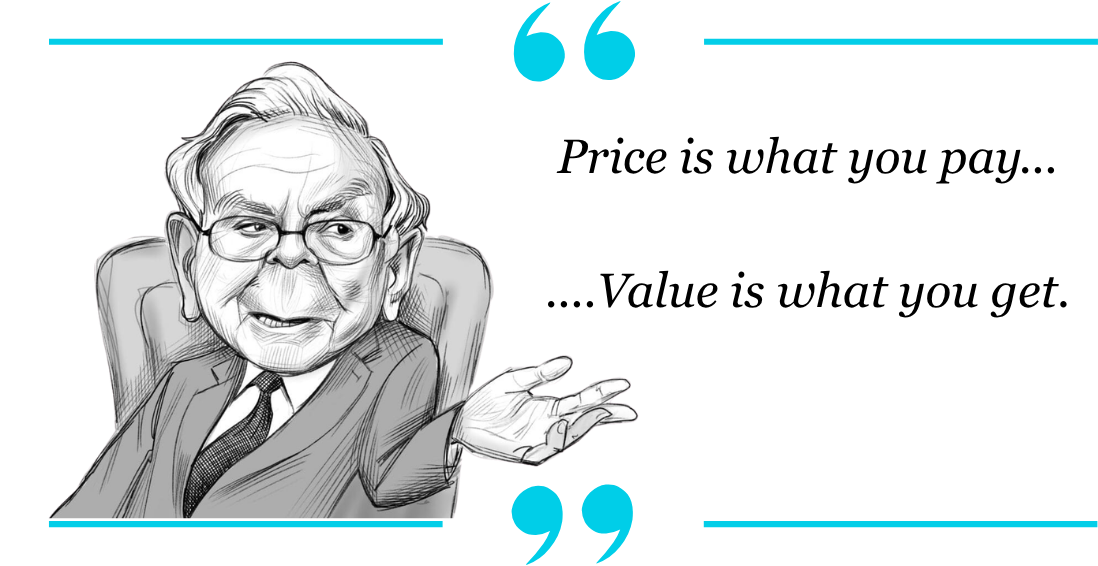
Buffett has spent six decades asking one question above all others: what is this actually worth? Not what does it cost. Not what does the market say it is worth right now. What is the underlying value?
Key Account Managers need to ask the same question, from the customer's perspective. What is the value of this relationship, this solution, this partnership, to your customer's business? Can you quantify it? Can you articulate it in their language?
If you can, price becomes a much smaller part of the conversation.
PRINCIPLE 2
Some things just take time... you can't make a baby in 1 mone by getting 9 women pregnant.
Only Buffett could make a point about patience this memorable.
KAM is a long game. That is not a weakness of the model. It is the model. If you are looking for quick wins, transactional selling is likely a better fit for you. Key Account Management, done properly, is complex selling on steroids. It involves multiple stakeholders, extended buying cycles, joint business planning and the slow, patient accumulation of trust.
Trust is the operative word. Research from the Cranfield KAM Best Practice Club, which I directed for over 20 years, consistently showed that suppliers who achieved true strategic partner status with their key accounts did so over three to five years, not three to five months. You have to deliver on your value proposition not once, but repeatedly, in good conditions and difficult ones. You have to show up when things go wrong, not just when they are going well.
Gaining genuine trust at a multi-stakeholder, senior level takes time. The supplier must provide the value that they promise in their value proposition several times before they are positioned as a trusted advisor. That is not a process you can compress, no matter how good your slides are.
There is a broader cultural point here too. If your organisation measures KAM success purely on quarterly revenue targets, it is creating the wrong conditions. Senior leaders need to establish a patient environment, one that understands the difference between short-term activity and long-term strategic value. KAM can deliver material results for both parties, but those results may take months, and sometimes years, to fully materialise.
Buffett famously said he would hold a great business forever. The best KAMs think the same way about their most important accounts.
Plant the tree. Wait for the shade.
PRINCIPLE 3
Look for three things in a person: Intelligence, energy and integrity. If they don't have the latter, forget the first two.
This one is about people. And it matters more than most KAMs realise.
The job does not rest on your shoulders alone. At your best, you are a network architect. You are building bridges between your organisation and your customers, connecting people who can create real value together. That means you need allies, inside your own business and inside theirs.
And the quality of those allies matters enormously.
Stakeholder mapping is a well-established practice in KAM. Which people have influence? Which have authority? Who are your champions and who are your blockers? All of that is useful. But Buffett's lens adds something that the standard stakeholder maps tend to miss: character.
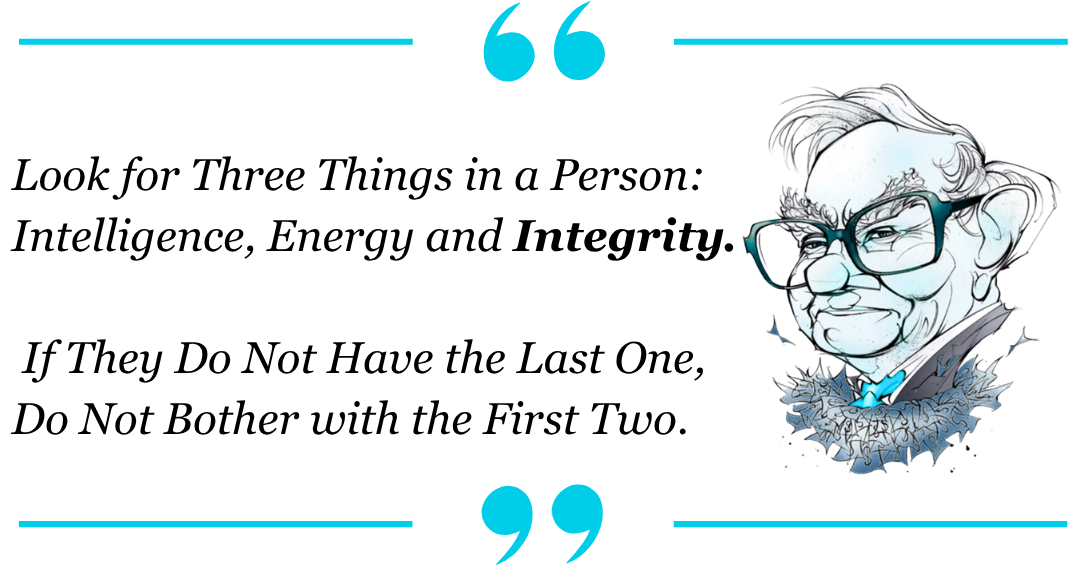
Intelligence and energy without integrity will eventually create problems. The brilliant colleague who lets things slip at a critical moment. The customer contact who over-promises to their own board and then blames the supplier when delivery falls short. The internal stakeholder who agrees with everything in the room and undermines it outside.
Too many people, in supplier and customer organisations alike, are focused primarily on their own goals and ambitions. The KAMs who build the strongest account relationships are the ones who seek out people in the customer's business, and in their own, who combine genuine competence with a real commitment to doing the right thing.
Build your relationships there. Those are the partnerships that hold under pressure. Seek integrity and build bridges with it.
PRINCIPLE 4
The best investment you can make is in yourself.
Buffett reads for five to six hours a day. He has done so for most of his adult life. Annual reports, newspapers, books on history, economics, science and biography. His partner, Charlie Munger, was famous for the same discipline. They called it building a latticework of mental models. An interconnected framework of ideas drawn from multiple disciplines that you can apply to any problem.
Here is the issue for many Key Account Managers. The role demands a breadth of knowledge that most professional development programmes do not deliver.
To do this job well, you need to understand strategy. You need to be commercially literate. You need to understand your customer's industry well enough to have a credible, independent point of view on their challenges. You need to be able to read a P&L. You need to understand how procurement works, how innovation gets funded, and how organisations make decisions under pressure.
Think about the skill set of a general manager. And then add complex selling!
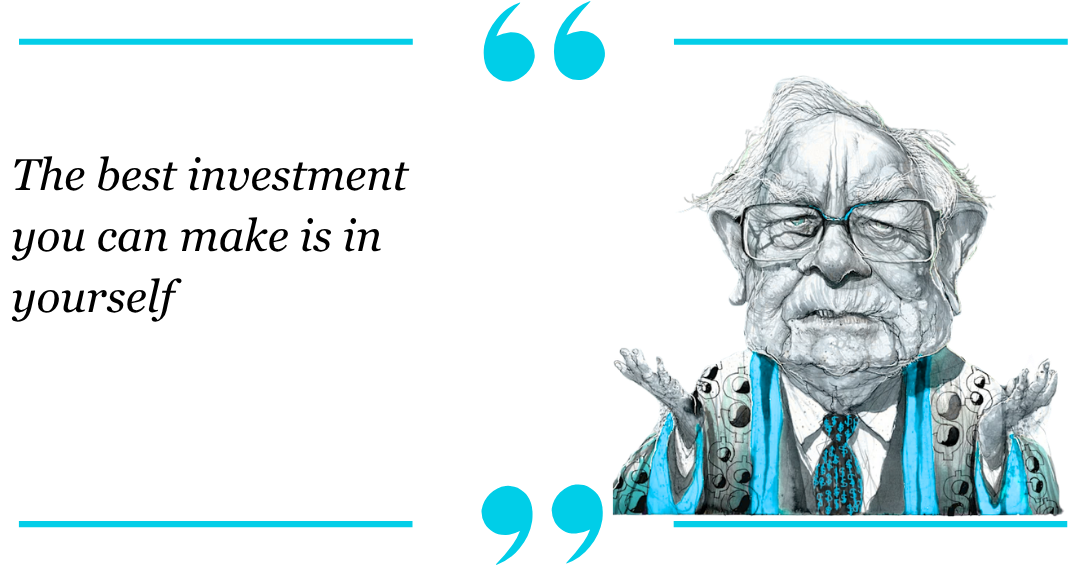
That is what great KAM looks like. And the responsibility for building that capability sits with you, not your employer. You can attend a programme and gain a set of skills. But the breadth required is wider than any single programme covers.
My advice: read widely.
Strategy, innovation, marketing, finance, leadership, economics. And above all, read deeply about the industries your most important customers operate in. The KAM who walks into a customer meeting with genuine insight about their world will always outperform the one with the best slide deck.
Invest in yourself. Consistently. Patiently.
As Buffett reflected, the compound interest of learning is remarkable.
PRINCIPLE 5
An idiot with a plan can beat a genius without one
Let me be direct with you. I am not a fan of KAM plans that nobody reads. You know the ones. Forty pages of stakeholder maps, account history and aspirational revenue targets, produced once a year, filed somewhere and never looked at again. Completeness theatre. The box is ticked. Nothing changes.
But that is not an argument against planning. It is an argument against bad (or no) planning.
Buffett has always been a meticulous thinker. Every investment decision is grounded in a clear thesis: here is what I believe about this business, here is why I think the market has mispriced it, here is the evidence I would need to change my mind. That is a plan. It is clear, it is actionable, and it is alive.
The equivalent in KAM is a joint business plan. Not a document your team produces about the customer. A genuine, co-created plan that both parties own. What are we trying to achieve together? By when? What does each party need to contribute? How will we measure progress? What are the blockers and what are the enablers?
The joint plan changes the dynamic completely. It shifts the relationship from supplier and customer to genuine partners working toward shared outcomes. That is where the real value is created, on both sides of the table.
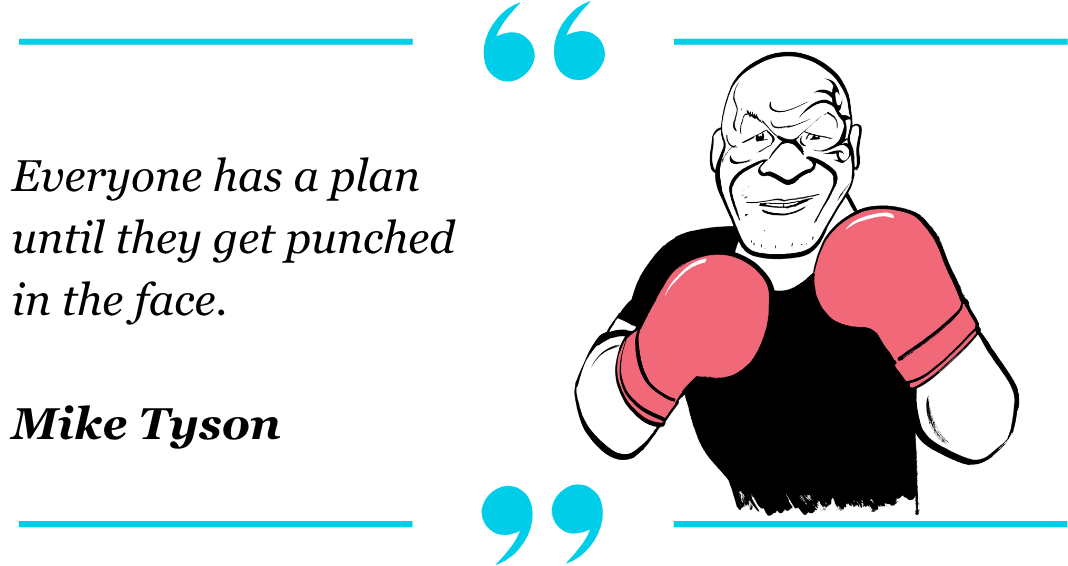
As Mike Tyson said - "Everyone has a plan until they get punched in the face...He was right.
Plans change.
They should change.
But the shared understanding built through good planning does not become worthless when circumstances shift... rather, it gives you a basis for adapting.
Have a plan, but keep it honest and make it dynamic, changing as circumstances alter (like adjusting the sails of a boat as the wind changes)
FINAL THOUGHTS
Warren Buffett is stepping back. But his philosophy is not going anywhere.
What strikes me, as I reflect on these five principles, is how little they have to do with technology. In an age that talks endlessly about artificial intelligence, automation and digital transformation, Buffett's most enduring lessons are stubbornly human. Understand value deeply. Build trust patiently. Surround yourself with people of integrity. Keep learning. Think clearly and plan honestly.
These are not soft skills. They are the hardest skills there are. They take years to develop and a lifetime to master. And they are the ones that will define the next generation of outstanding Key Account Managers, regardless of what the technology landscape looks like in three years' time.
AI will change how KAMs work. It will accelerate research, surface insight, support planning and help personalise customer communications at scale. That is a genuine opportunity and one we are actively developing at both Value-Matters and AKAM. But the judgment, the relationship-building, the ability to sit with a customer and help them solve a problem they have not yet fully articulated, that remains irreducibly human.
Buffett planted trees for 60 years. He sat in the shade too, of course. But mostly, he planted.
That is the invitation for all of us.
Want to go a bit deeper?
If these ideas resonate, consider joining AKAM, the Association of Key Account Management. We offer a growing programme of webinars, events, resources and a professional network that is focused on advancing the KAM discipline. Drop me a line if you want more information, or simply want a conversation.
Mark Davies
MD, Value-Matters
Chairman, AKAM (Association of Key Account Management)


Responses